How to Make Ghee
Yes, anyone can make ghee! And, when made with grass-fed butter, the home process retains more nutrients than ghee made in a centrifuge in commercial products. Here is what you need to get started: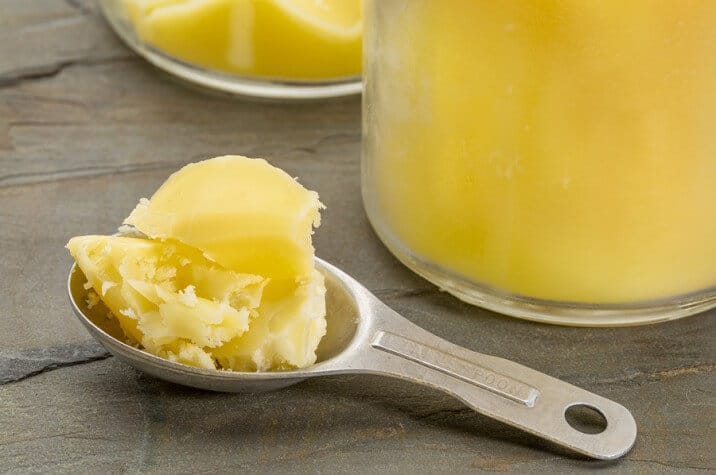
- 1 pound of grass-fed unsalted butter
- Deep, wide-bottomed skilled
- Wooden spoon or heat-resistant spatula
- Cheesecloth
- Mesh skimmer
- Mesh strainer
- Glass jar
Place one pound of butter into a deep skillet over medium-low heat and watch it melt. The key here is to initially melt the butter slowly. Do not try to rush this step. As the butter begins to bubble, it will spatter a bit. Stir with a long-handled spoon and maintain a simmer.
Continue to simmer, stirring occasionally, for 20-30 minutes until the milk proteins have separated from the gold liquid. There will be white foam on the top, and some bits of milk fats on the bottom of the pan. Gently skim the foam off with the mesh skimmer and discard. You may have another “foam up” stage, and this is good. Skim and discard once again. Now, the milk fats on the bottom of the pan will continue to brown. Again, this is a good thing – this is where the distinctive nutty flavor comes from.
Continue to simmer until they are golden brown, but not burnt. Keep a watchful eye because at this stage, the ghee can quickly burn. Remove from heat and allow to cool to room temperature. Place several layers of cheesecloth in the mesh strainer (or use nut milk bags) and slowly pour the butter into the jar. The result? A beautiful golden clarified butter that is liquid gold.
While it will firm up a bit at room temperature,keep in the refrigerator if you desire a spreadable ghee. Ghee will remain fresh at room temperature for several weeks, when sealed properly. It can last months in the refrigerator. Because fats tend to absorb other flavors, it’s essential that ghee is kept properly sealed whether in the refrigerator or on the counter.

No comments:
Post a Comment